
RustyData

About

A consultancy built on complexity science

Rusty Data is the freelance practice of Chris McWilliams — a complexity scientist who builds models people can actually use.

Chris

I'm Chris McWilliams. I hold an MRes and PhD in complexity sciences from the University of Bristol's Bristol Centre for Complexity Sciences, following a first-class degree in theoretical physics at Imperial College London — and, before all that, an art foundation at Camberwell. I still work at Bristol as a Research Fellow in the School of Engineering Mathematics and Technology, developing machine-learning decision-support tools for intensive care.

My work has spanned theoretical ecology — including research on how habitat loss destabilises food webs, published in Nature Communications — and clinical machine learning at the bedside of an intensive care unit. Across all of it the lesson is the same: the hard part of data science is rarely the algorithm; it's understanding the system the data came from.

Why 'Rusty Data'?

Because real data is never shiny. It arrives weathered — oxidised by time, gaps and human process — and the job is not to pretend otherwise but to work with it honestly. The name is a small promise: no lab-bench idealism, no benchmark theatre. Models built for data as it actually is.

How I work

Small, senior, hands-on. You work directly with me, from the first whiteboard sketch to the final handover. I favour interpretable models, reproducible pipelines and writing things down — and I'd rather tell you a model shouldn't be built than build one that misleads.

Mission

Mission & principles

Rusty Data exists to point serious technical work at problems that deserve it.

The mission

AI and data science concentrate power wherever they are applied. I want them applied to ocean enforcement, ecological recovery, fair institutions and public understanding — not only to ad clicks. Rusty Data is a small, deliberate bet that a technical practice can be both rigorous and principled.

What that means in practice

It shapes which projects I take on, and how they're done: interpretable models over opaque ones, communities and domain experts in the loop, honest uncertainty over confident nonsense, and deliverables the client can own and understand long after the engagement ends.

Ability to pay

Data science can bring huge benefits to many parts of society, but the cost of hiring a contractor can be prohibitive for smaller and not-for-profit organisations. For the right cause, I'm willing to work at rates based on ability to pay. If that's you, please get in touch.

Working principles

  • Choose projects for impact, not just interest
  • Interpretability and honesty about uncertainty by default
  • Domain experts and affected communities in the loop
  • Ability-to-pay rates for the right not-for-profit causes
  • Open methods and open source wherever possible

The people

Who you'll work with

Chris McWilliams

Chris McWilliams

Founder · Complexity scientist

Chris founded Rusty Data and leads its modelling work — a complexity scientist with 15+ years across interdisciplinary research, AI and data modelling, building bespoke models for real decisions, from intensive-care discharge to ecosystem simulation.

  • 15+ years — interdisciplinary research, AI & data modelling
  • PhD, Complexity Sciences — University of Bristol
  • First-author papers in Nature Communications, BMJ Open & PNAS
  • Research Fellow, Engineering Mathematics & Technology
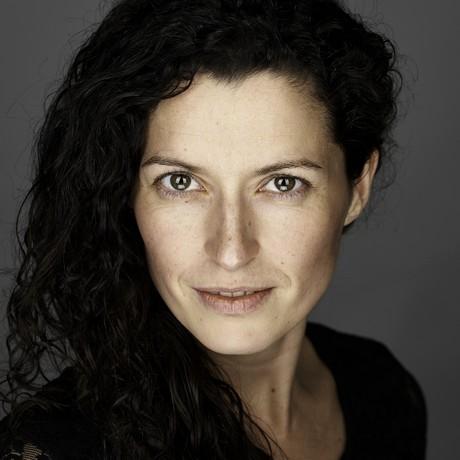
Tamzin Kitby

Tamzin Kitby

Ethnography & Science Communication

Tamzin brings a writer's and ethnographer's eye to Rusty Data — grounding data work in real human stories and making it legible to the people it affects. She created the Fair Tales project, funded by the Jean Golding Institute.

  • PhD, Creative Writing & Ethnographic Research
  • MRes, Transnational Writing — Bath Spa
  • Creator of Fair Tales (Jean Golding Institute)
  • Company Secretary, Rusty Data

Research

Rooted in complexity science

Rusty Data grew out of an academic life spent studying how interacting parts become behaving wholes.

Background

I trained in complexity sciences at the University of Bristol's Bristol Centre for Complexity Sciences, and I continue to work at the university alongside the consultancy. That dual footing keeps the practice honest: consulting work stays anchored to current research, and research stays anchored to real problems.

Themes

My PhD, though badged as complexity science, was really theoretical ecology — how habitat loss and species interactions shape whether an ecological community stays standing. Since then my research has moved between two worlds: ecological modelling, and clinical machine learning for intensive care, where I build decision-support tools from routinely collected patient data.

Underneath both is one enduring interest: how simulation, networks and machine learning can support real decisions in systems too tangled to reason about by intuition alone.

Selected publications

First-author and collaborative work across ecology, clinical machine learning and systems biology.

  • McWilliams C, et al. The stability of multitrophic communities under habitat loss. Nature Communications · 2019
  • McWilliams CJ, et al. Towards a decision support tool for intensive care discharge: machine learning algorithm development using MIMIC-III and Bristol, UK. BMJ Open · 2019
  • Voliotis M, Perrett RM, McWilliams CJ, et al. Information transfer by leaky, heterogeneous, protein kinase signaling systems. PNAS · 2014
  • Evaluation and improvement of the National Early Warning Score (NEWS2) for COVID-19: a multi-hospital study. BMC Medicine · 2021
  • Knoop E, Barter E, … McWilliams CJ, Roberts L. Tangible Networks: A Toolkit for Exploring Network Science. Proc. ECCS 2014, Springer · 2016